

The Best Drainage Grate Materials for Saltwater Pool Environments
Saltwater pools can transform a backyard into a relaxing retreat. However, they create unique challenges for the surrounding hardscape and drainage system. While pool owners often focus on decking materials, finishes, and water features, the drainage grates around the pool are just as important to the long-term performance of the space.
Furthermore, because saltwater contains chlorides that can accelerate corrosion, selecting the right drainage grate material is essential. Therefore, the wrong choice can lead to rust, discoloration, and costly repairs, while the right material can provide years of reliable service with minimal maintenance.
Why Material Selection Matters Around Saltwater Pools
Pool deck drainage systems are constantly exposed to water, chemicals, sunlight, and fluctuating temperatures. As a result, in a saltwater pool environment, these conditions become even more demanding.
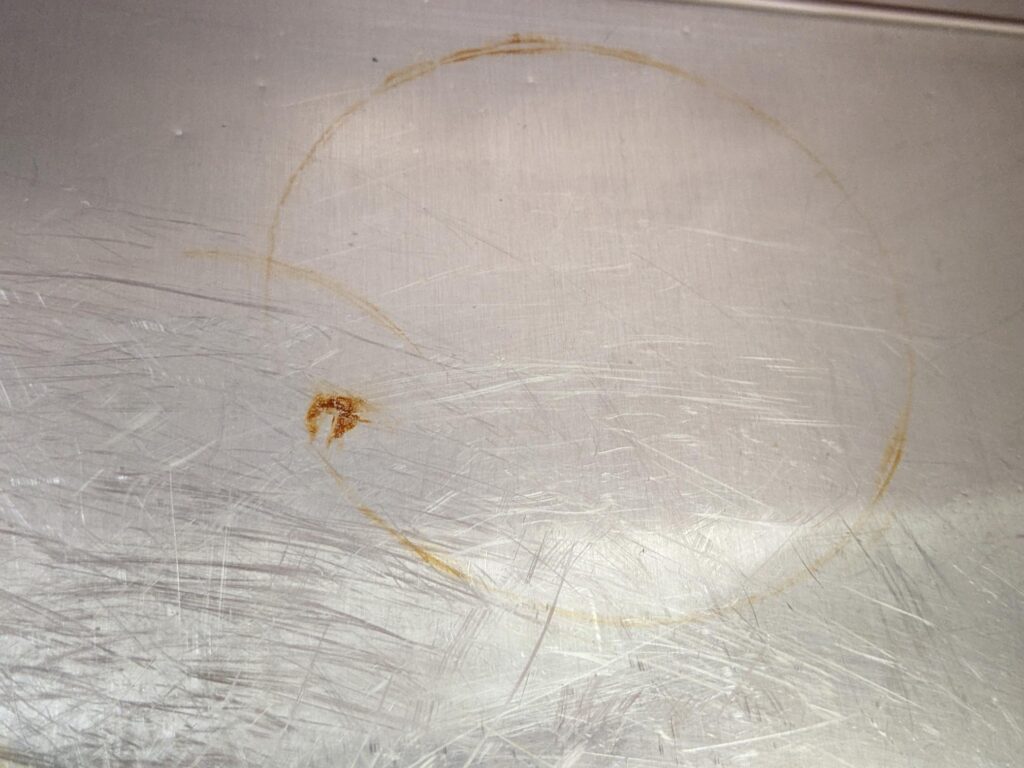
As water splashes onto the surrounding deck and evaporates, salt residue can remain behind. Consequently, over time, these deposits may contribute to corrosion and deterioration of materials not designed for saltwater exposure, such as 304 stainless steel or galvanized steel.
Choosing a durable, corrosion-resistant grate material helps:
- Reduce maintenance requirements
- Extend the lifespan of the drainage system
- Maintain safe walking surfaces
- Prevent premature replacement costs
- Reduce fading and brittleness of drain grates
- Ensure the long-term appearance of the pool deck
Top Drainage Grate Materials for Saltwater Pools
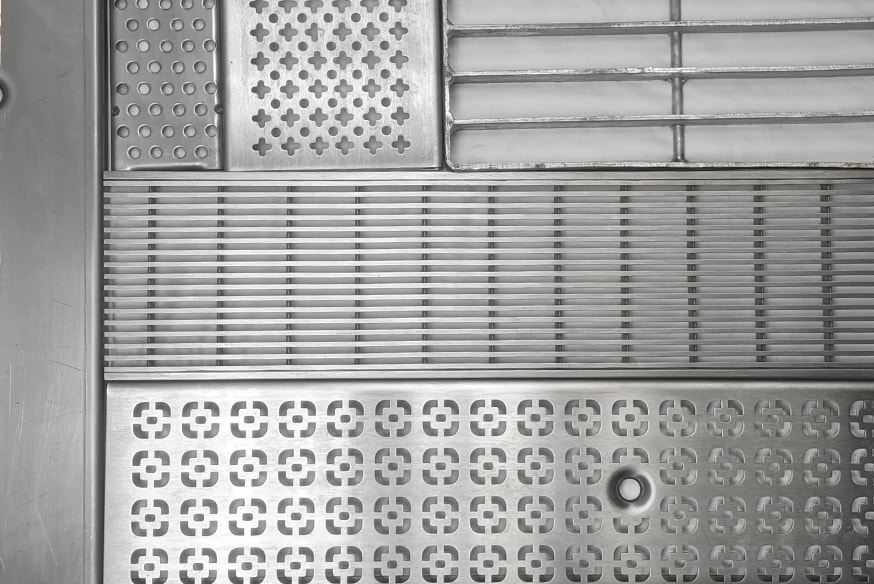
For most residential and commercial saltwater pool applications, 316 stainless steel is widely considered the best drainage grate material due to its superior corrosion resistance.
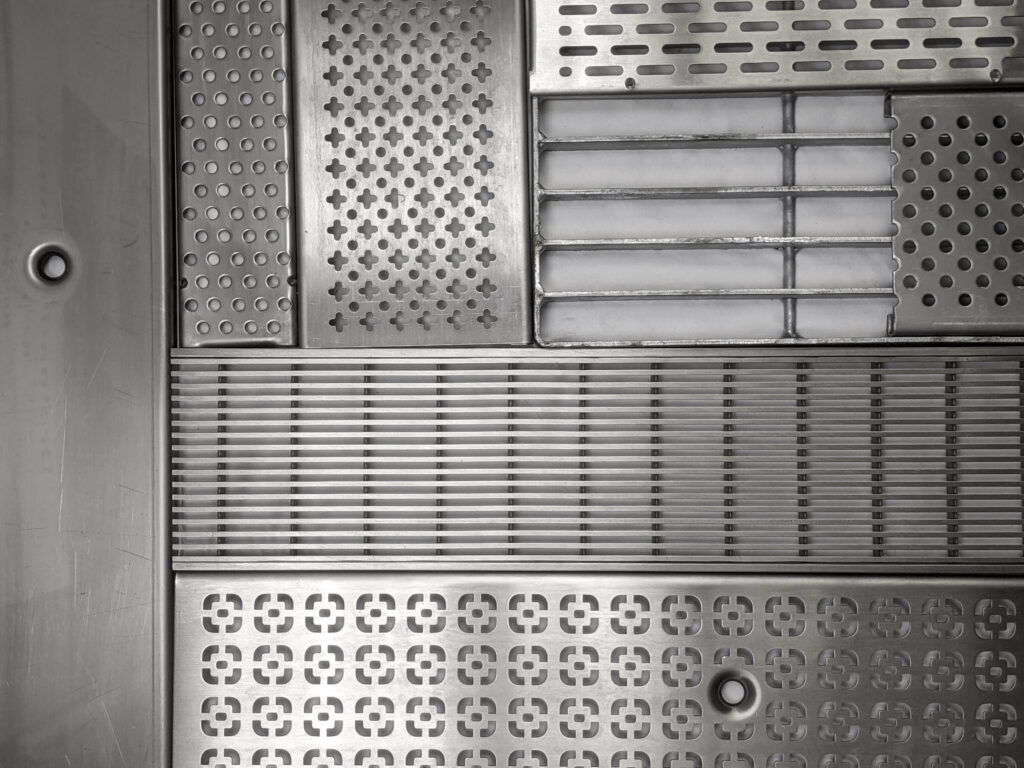
316 Stainless Steel
Often referred to as marine-grade stainless steel, 316 stainless steel contains molybdenum, which enhances its ability to withstand chloride exposure. Therefore, it is particularly effective in environments where saltwater, humidity, and/or pool chemicals are present. In many luxury pool projects and high-end outdoor living spaces, 316 stainless steel is frequently the preferred choice.
- Excellent resistance to rust and corrosion
- Attractive architectural appearance
- Long service life in saltwater environments
- Suitable for decorative and modern pool designs
- Easy to clean and maintain
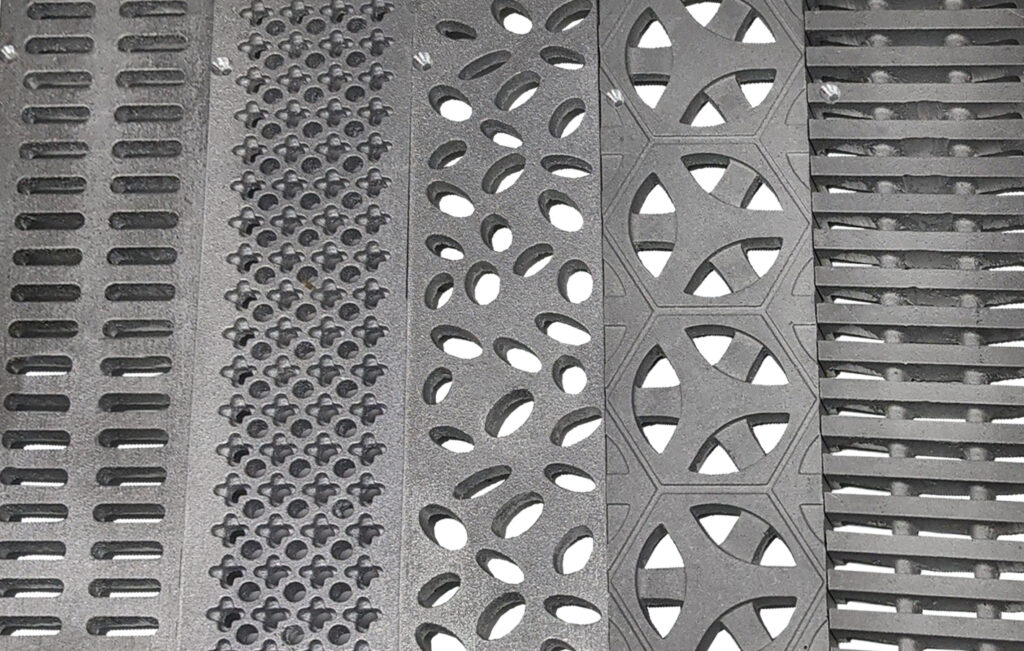
Marine Grade Aluminum
Marine-grade aluminum offers improved corrosion resistance compared to standard aluminum and can be suitable for certain saltwater applications. However, for drainage grates that are continuously exposed to saltwater, pool chemicals, and standing moisture, 316 stainless steel or UV-stabilized materials (HDPE, PP) grates are generally preferred for their superior long-term corrosion resistance and durability.
- Naturally forms a protective oxide layer
- Lightweight and easy to install
- Good corrosion resistance, especially 5052, 5083, and 5086 alloys
- Does not rust like carbon steel
Fiberglass
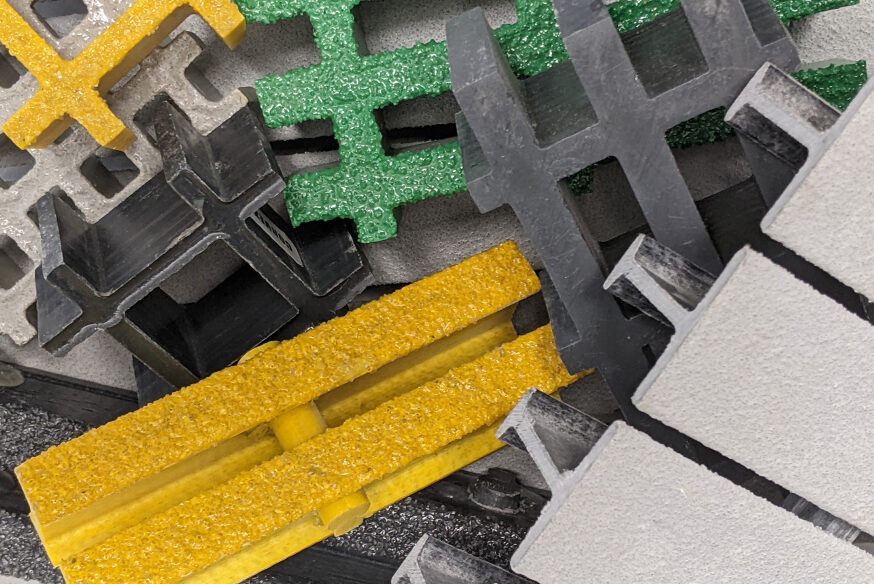
Fiberglass Reinforced Polymer (FRP) is an excellent choice for saltwater pool drainage systems because it is naturally resistant to corrosion, moisture, and pool chemicals. In contrast, unlike metal, fiberglass will not rust. Thus, it is a durable yet low-maintenance option that performs well in harsh outdoor environments while providing long-lasting strength and reliability.
- Naturally corrosion-resistant and will not rust
- Lightweight yet exceptionally strong
- Resistant to pool chemicals, saltwater, and UV exposure
- Non-conductive, reducing the risk of galvanic corrosion
- Low maintenance with a long service life
UV-Enhanced Grating
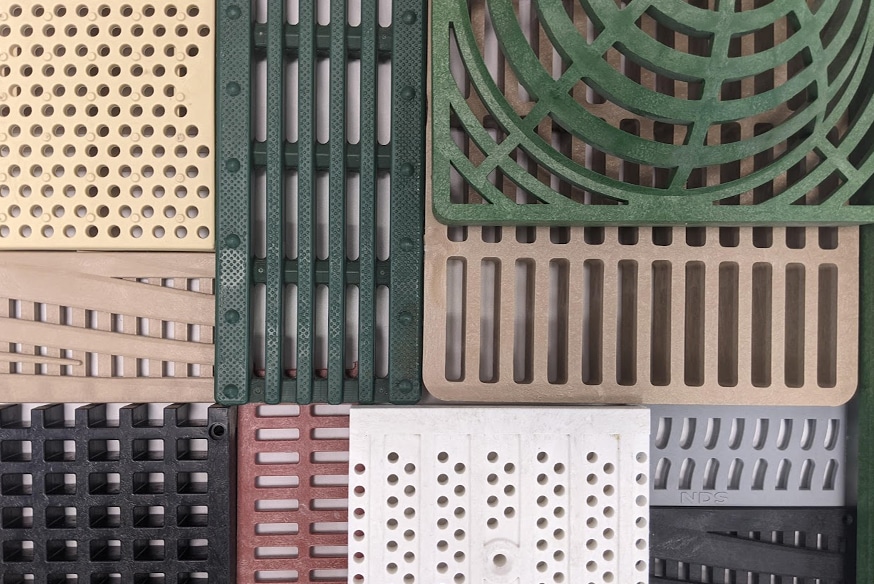
UV-enhanced HDPE and/or Polypropylene is a durable, corrosion-resistant material that performs exceptionally well in saltwater pool environments. Engineered with inhibitors to withstand prolonged sun exposure, it resists fading, cracking, and brittleness while remaining minimally affected by saltwater and common pool chemicals. HDPE and Polypropylene plastic grating’s lightweight construction and low-maintenance durability make it a popular choice for residential and commercial pool deck drainage systems compared to other plastic grating options.
- Will not rust, corrode, or rot
- UV stabilizers help prevent fading, cracking, and brittleness
- Resistant to saltwater, chlorine, and common pool chemicals
- Lightweight for easy installation and maintenance
- Available in a variety of colors and decorative styles
What Materials Should Be Avoided in Saltwater Pools
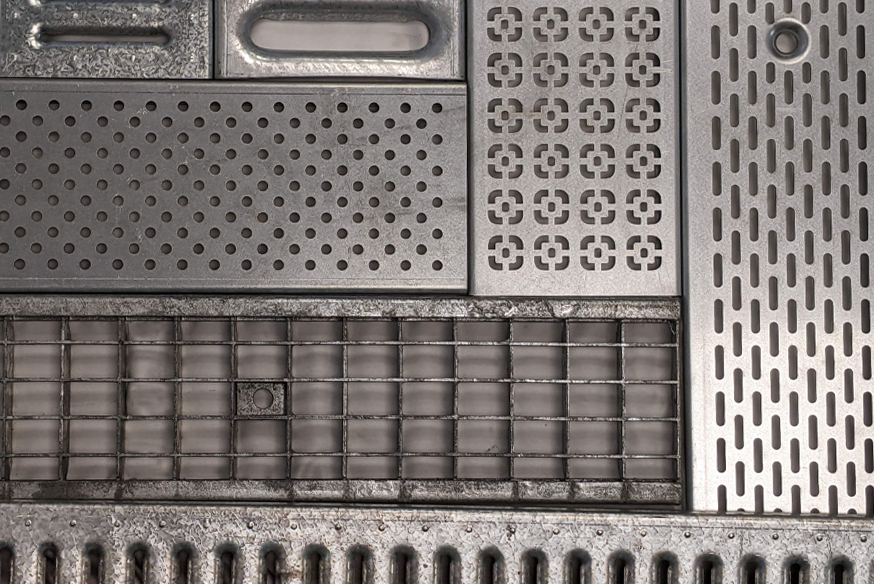
Galvanized Steel
Galvanized steel is coated with a layer of zinc to help resist corrosion, but it is not well-suited for saltwater pool environments. Chloride exposure accelerates the breakdown of the zinc coating. As a result, once that protective layer is compromised, the underlying steel begins to corrode quickly.
304 Stainless Steel
Not all stainless steel is created equal. Lower-grade stainless steels may be suitable for general outdoor applications but often struggle in chloride-rich environments. Always verify the stainless steel grade before specifying or purchasing drainage components.
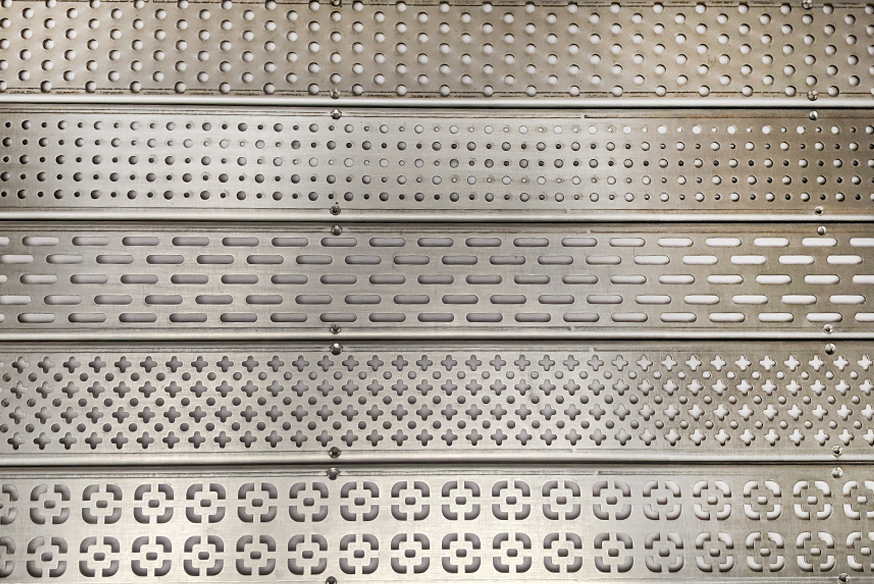
Untreated Cast Iron
While durable in some applications, untreated cast iron is vulnerable to corrosion when exposed to salt and moisture. Without proper protective coatings and maintenance, it may not provide long-term performance around a saltwater pool.
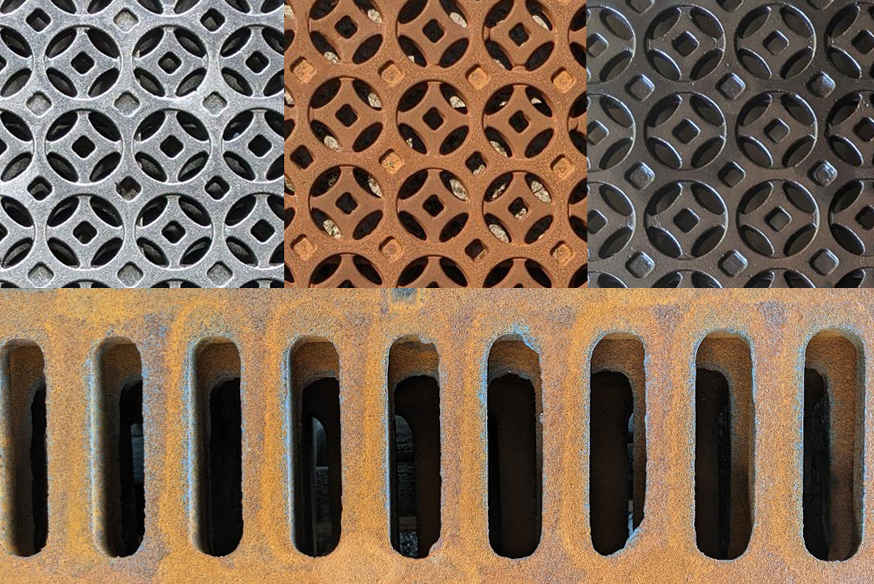
Factors to Consider When Choosing Pool Drain Grates

Load Class
Pool deck drainage grates should be capable of supporting expected traffic, including pedestrians, patio furniture, and pool maintenance equipment. Therefore, choosing the appropriate load class helps ensure safety and longevity.
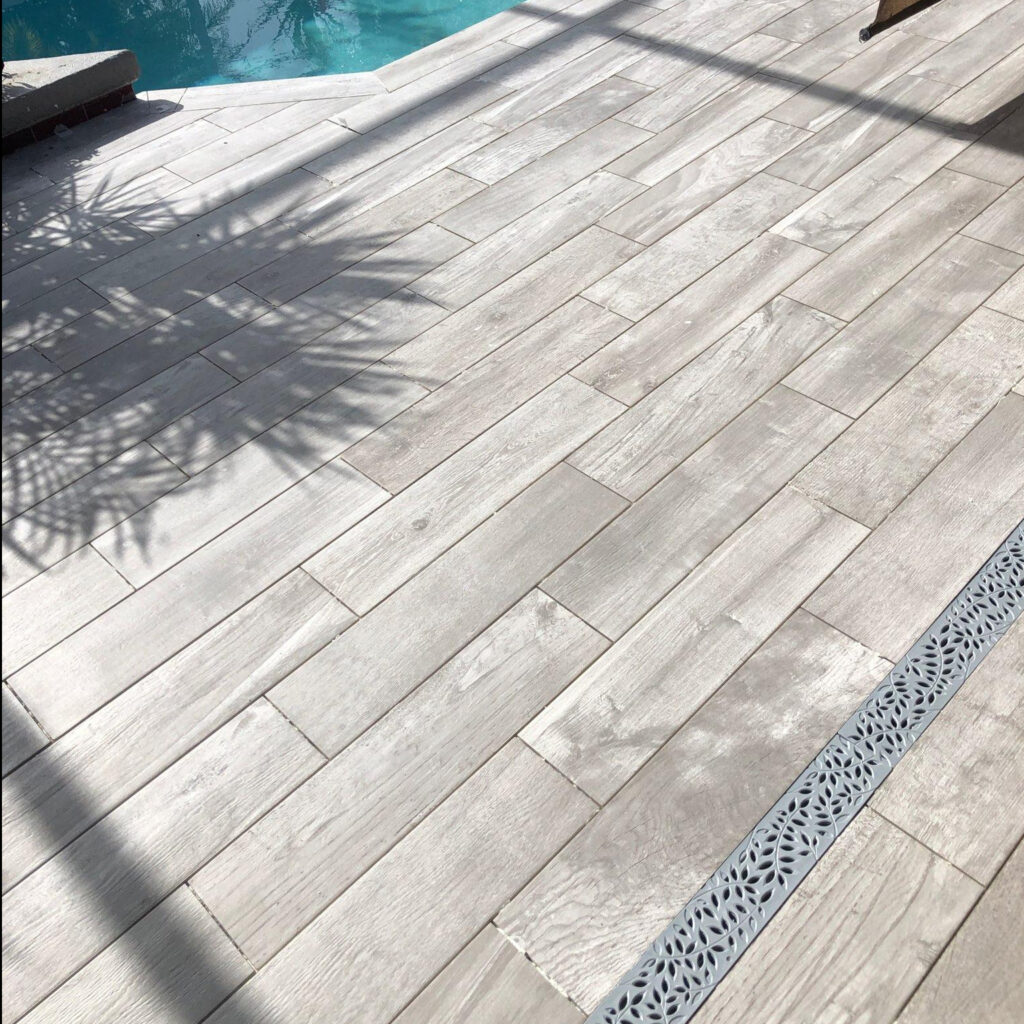
UV Exposure
Outdoor pool environments experience constant sun exposure. As a result, materials should be UV-resistant to prevent fading, cracking, or degradation over time.
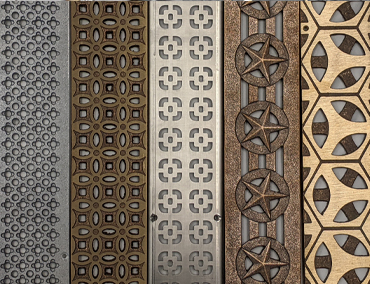
Decorative Grates
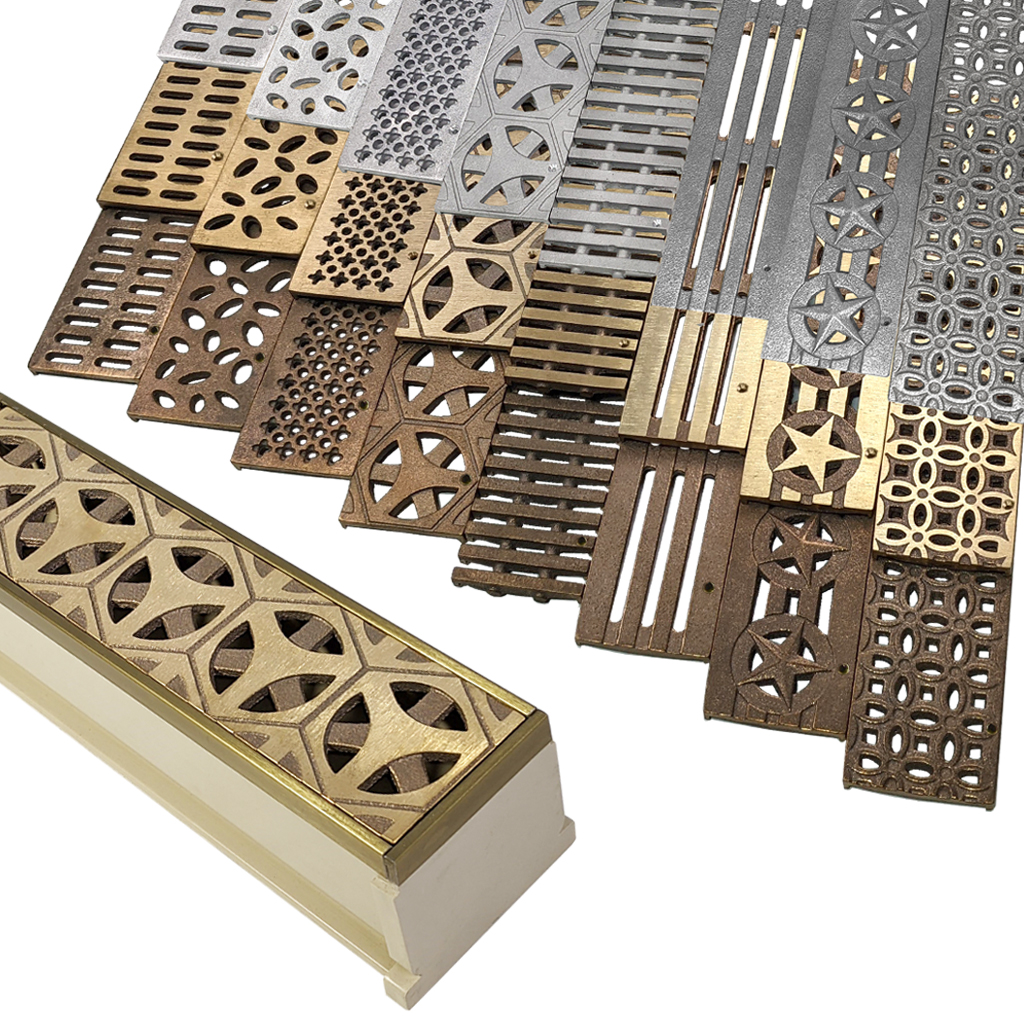
Today’s decorative drainage grates are available in a wide range of patterns and finishes. The right grate can complement the surrounding hardscape while providing effective surface drainage.
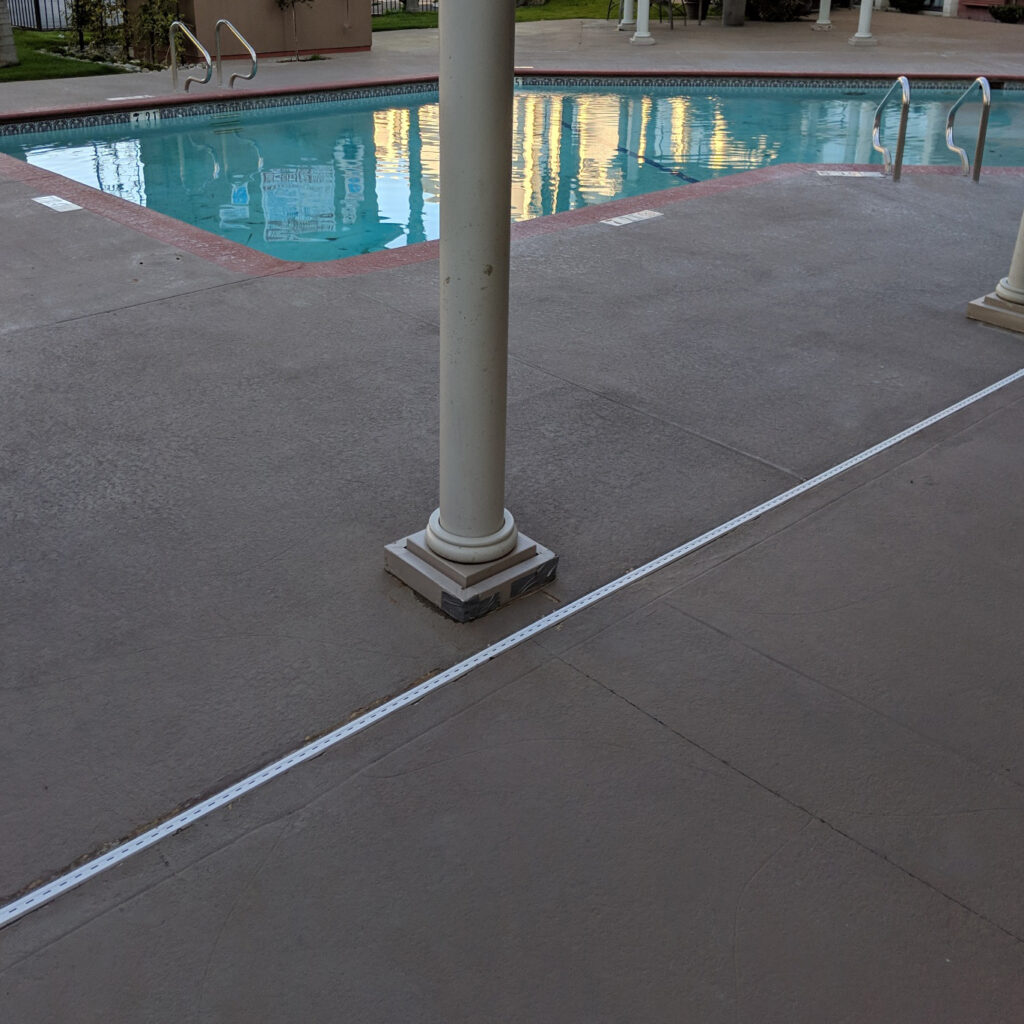
Annual Maintenance
When selecting drain systems, it is beneficial to choose systems that allow easy access for cleaning and inspection. Routine maintenance helps prevent debris accumulation and ensures optimal drainage performance. However, there are some pool drainage systems that do not have removable grating, which inhibits this best practice.
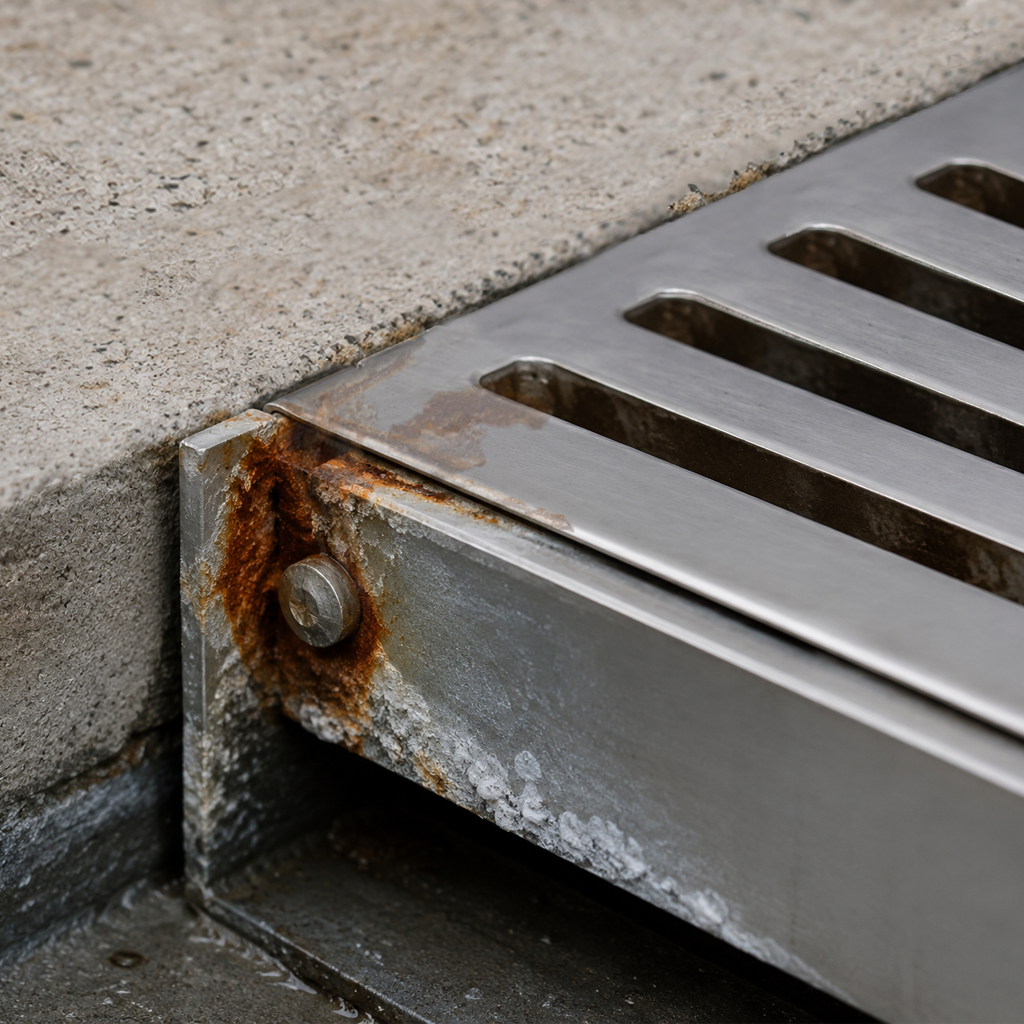
Galvanic Corrosion
Galvanic corrosion occurs when two different metals come into contact in the presence of saltwater or moisture, causing one metal to corrode more quickly than normal. Using compatible materials throughout a drainage system helps reduce the risk of premature corrosion, therefore extending the life of the installation.
Salt Water Pool Frequently Asked Questions
Will saltwater pools cause drain grates to rust?
Saltwater can accelerate corrosion on susceptible metals. Choosing corrosion-resistant materials such as 316 stainless steel, HDPE, or Polypropylene grates help prevent rust and deterioration.
Is stainless steel better than plastic for saltwater pools?
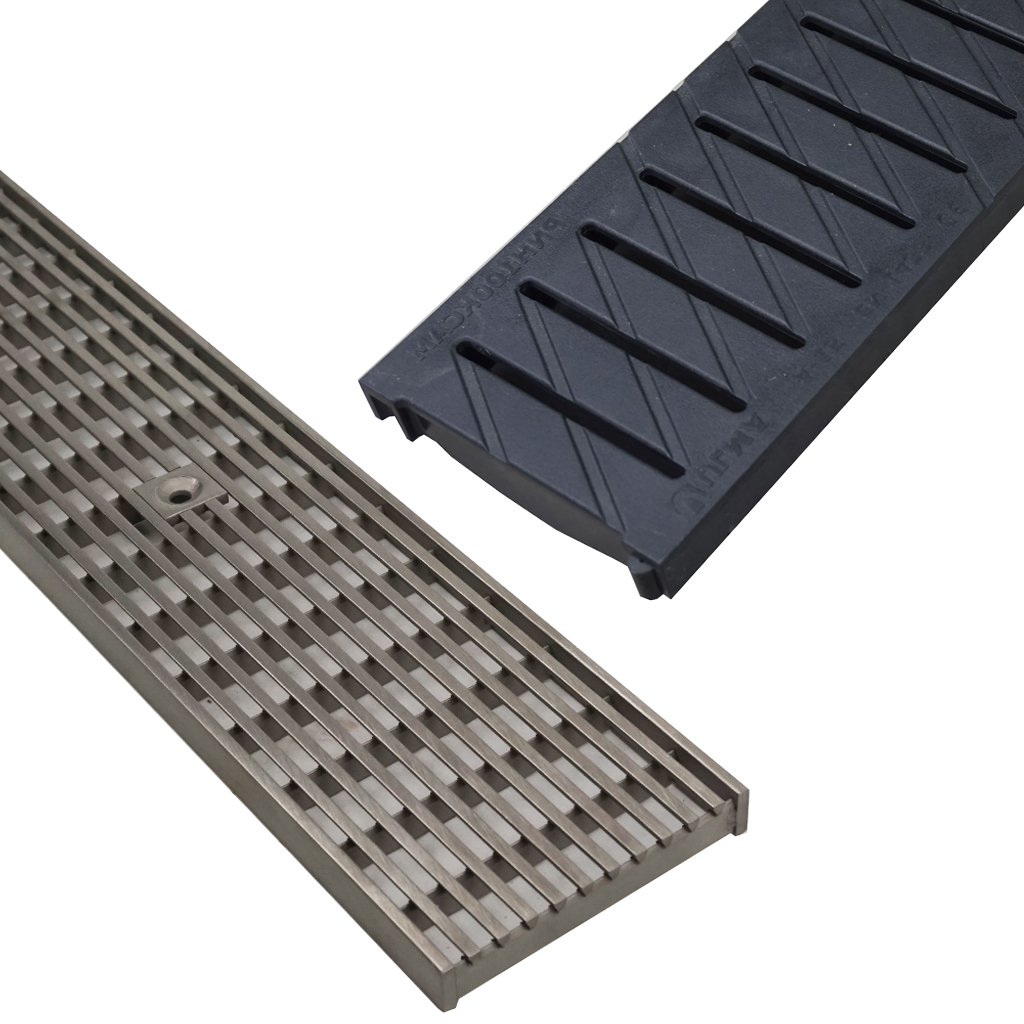
Both materials perform well. Stainless steel offers a premium appearance and exceptional durability, while plastic grates made from HDPE or Polypropylene provide corrosion-proof performance and lower maintenance requirements.
How often should pool drainage systems be cleaned?
Most pool drainage systems should be inspected and cleaned periodically throughout the swimming season to remove debris, maintain water flow, and reduce salt buildup.
Are decorative trench drains suitable for saltwater pools?
Yes. Decorative trench drains with corrosion-resistant grates are commonly used around saltwater pools to improve drainage while enhancing the appearance of the pool deck.
When evaluating drainage solutions for a saltwater pool, material selection should be one of the top priorities. The best drainage grate material is one that can withstand constant exposure to salt, moisture, UV rays, and pool chemicals without sacrificing performance or appearance.
For most applications, 316 stainless steel and high-quality UV-stabilized HDPE or Polypropylene grates offer the best combination of durability, corrosion resistance, and long-term value. Therefore, by selecting the right material and maintaining the drainage system properly, homeowners and designers can help ensure a safer, cleaner, and more attractive outdoor living and pool space for years to come.
The experts at Trench Drain Systems can help you find the right drains to fit your plan and budget. Contact us for a free quote or for further information on drainage solutions, visit TrenchDrain.com or DrainageKits.com
Phone: 610-882-3630
Email: Shop@TrenchDrain.com
Click here for a fast and free quote!
