

In food and beverage facilities, drainage has to keep up with more than water. Frequent washdowns, cleaning chemicals, heat, production fluids, and heavy traffic can all affect how a drainage system performs. But that does not mean every area needs fully stainless steel trench drains. The right system depends on the environment, and there are a few materials that can play very different roles: polymer concrete with vinyl ester resin, stainless steel, and plastic drainage.
Vinyl Ester: Built for Demanding Environments

Vinyl Ester – POLYCAST® 600 with DG0669 stainless bar grating
For many food and beverage facilities, vinyl ester polymer concrete can provide the chemical and temperature resistance needed without moving to an entirely stainless system.
The POLYCAST® 600/700 Series is available with a vinyl ester formulation designed for applications exposed to extreme heat and corrosive solutions. It can also be paired with stainless steel grating and edge protection.
This combination can provide a practical balance of performance, durability, and cost for areas that need more than standard polymer concrete, but do not require a stainless steel channel.
Stainless Steel: When the Drain Itself Matters
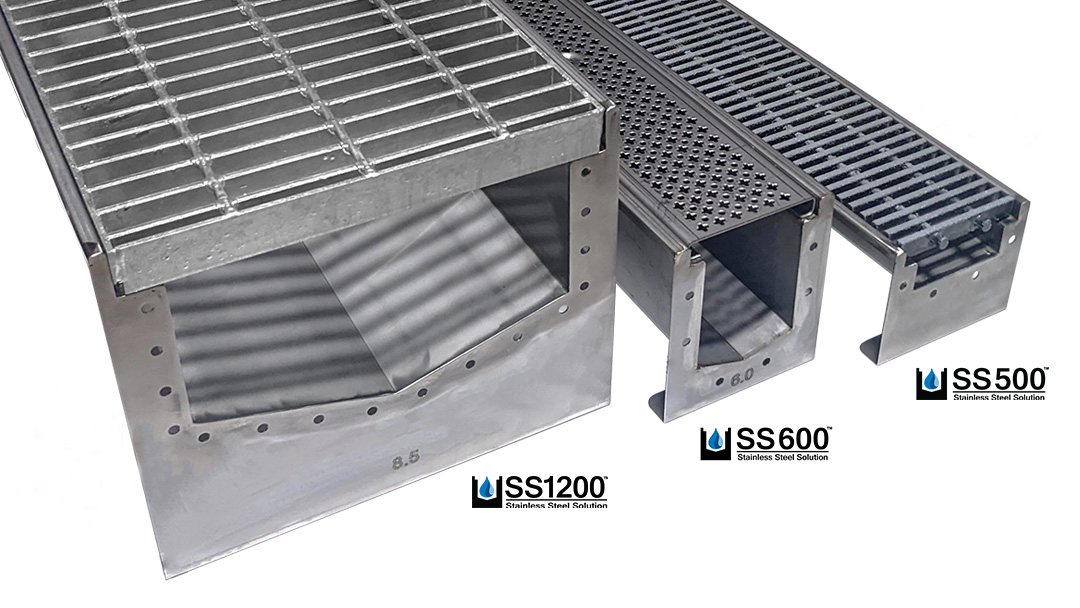
Some environments call for more than a corrosion-resistant channel. In food processing, breweries, wineries, commercial kitchens, and other sanitation-focused facilities, the drainage channel itself may need to be smooth, durable, easy to clean, and able to accommodate high-heat situations.
That’s where fully stainless steel drain systems come into play. The 6″ wide SS600 from the exclusive SS Series™ is an ideal system in this type of application.
The SS600 features a stainless steel channel with a built-in slope and smooth interior designed for efficient drainage. Stainless steel construction is particularly useful where frequent cleaning, hot washdowns, sanitation, and demanding operating conditions are part of everyday use.
For these applications, stainless steel is not simply about appearance. It becomes part of the facility’s overall long-term drainage and sanitation strategy.
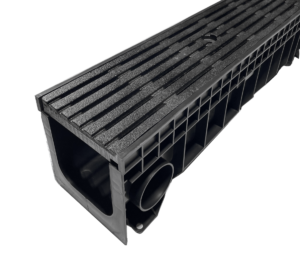
ULMA HYDROPLUS with Bronze Age™ Bars grating – Ductile Iron
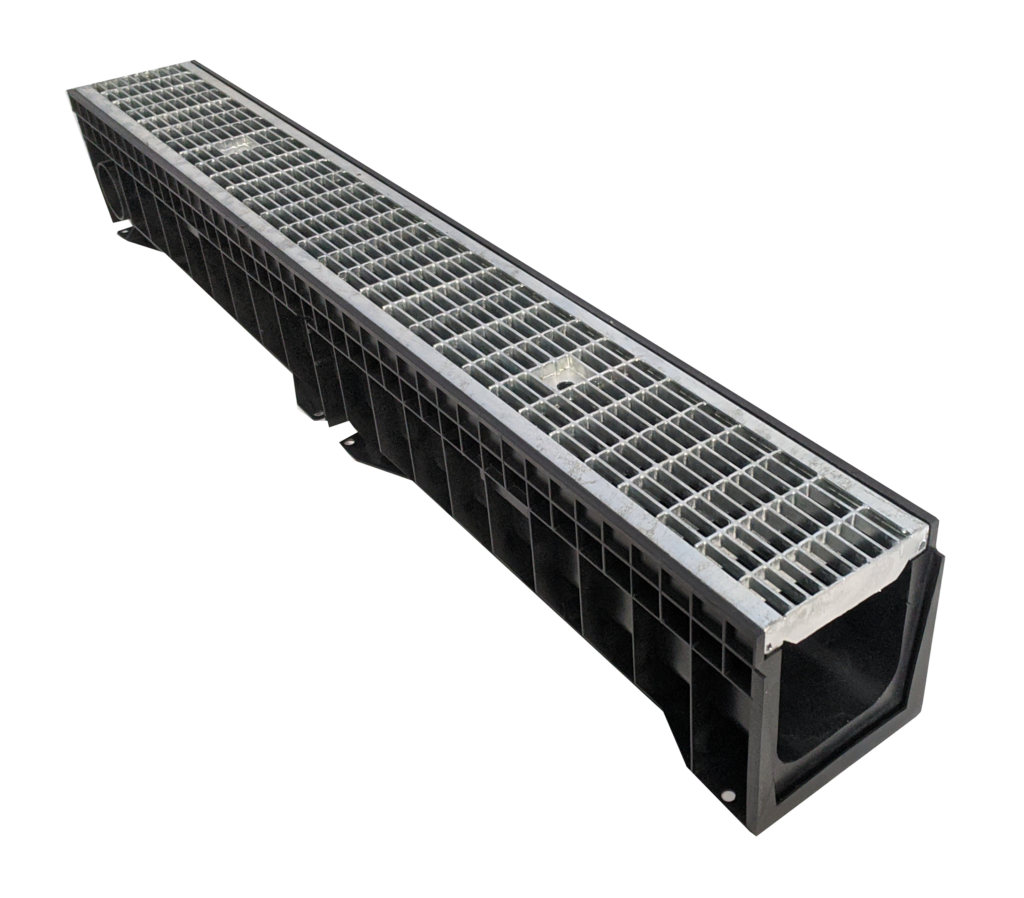
ULMA HYDROPLUS with 406 Heelproof Galvanized Mesh grating
Plastic Drainage Still Has a Place
Not every drain in a food or beverage facility needs to be stainless or vinyl ester.
Plastic systems such as HYDROPLUS can be appropriate in areas where the drainage environment is compatible with plastic construction.
For example, a facility may have exterior walkways, non-production areas, patios, or other locations where temperatures, chemicals, cleaning requirements, and loading are less demanding.
The key is to match the material to the application.
A plastic drain that works well outside a facility may not be the right choice for a production floor receiving hot chemical washdowns.
When Standard Drainage Isn’t Enough
Some facilities have drainage requirements that cannot be solved with a standard channel.
Equipment layouts, floor plans, outlet locations, transitions, unusual dimensions, or specialized sanitation requirements may call for a custom stainless steel drainage system.
Custom fabrication allows the drainage to be designed around the facility rather than forcing the facility to work around a standard drain.
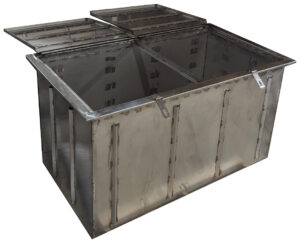
Custom 316L Stainless Steel Sump Pit Measuring 6′ x 4′ x 3′
Trench Drain Systems offers custom drainage solutions, with talented in-house engineers designing and producing unique drains and accessories.
In addition, TDS provides a wide range of grating styles and materials for new installations or replacement projects, from standard bar grating to specialty custom designs, all tailored to your specifications.
Which Trench Drain Material Is Right?
Unfortunately, there is no universal answer. Each application is unique and has its own set of requirements.
Vinyl ester: A practical option for demanding brewery, winery, and industrial environments where chemical and temperature resistance are important. Continual Heat Threshold Chart.
Stainless steel: A strong choice for applications where sanitation, cleanability, heat resistance, and a fully stainless drainage channel are priorities.
Plastic: Appropriate for areas where the environment and performance requirements are compatible with plastic drainage, such as outdoor patios, courtyards, or pedestrian walkways.
Custom stainless: Designed for facilities with specialized layouts, sanitary requirements, or drainage conditions that require something beyond a standard system.

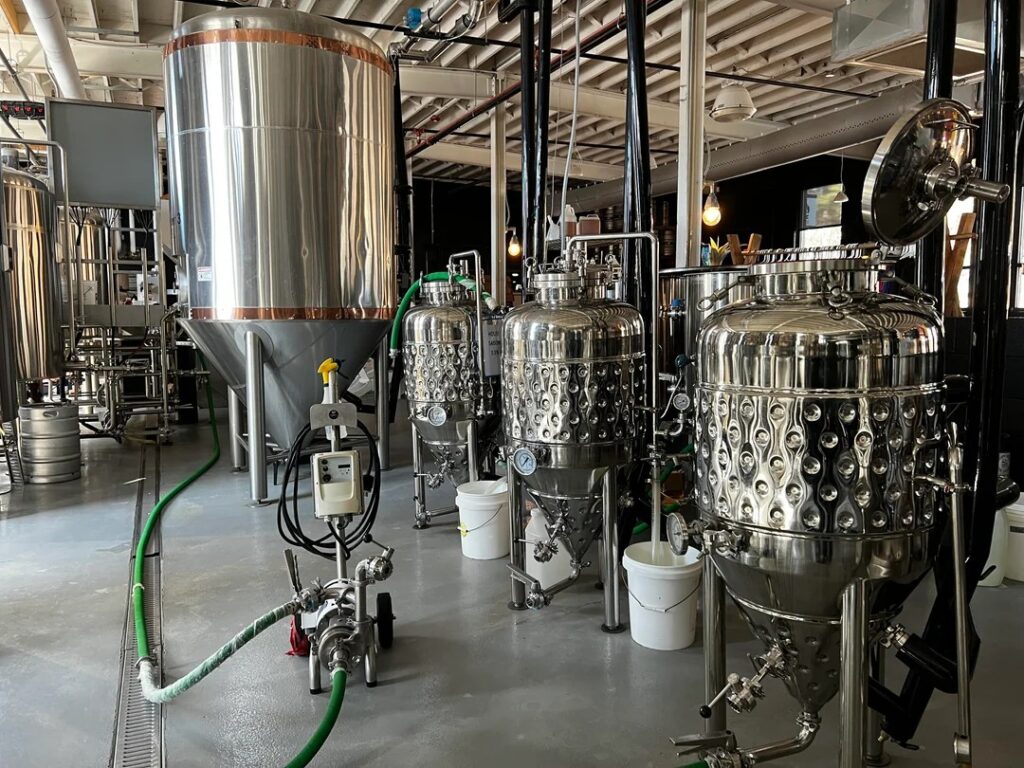
The right drain starts with the environment.
Before choosing a trench drain, consider what enters the drain, how hot it gets, what chemicals are present, how often the floor is cleaned, how much traffic crosses the grate, and what the facility requires for sanitation.
The goal isn’t to specify the most expensive drain.
It’s to specify the right drainage system for the job.
The experts at Trench Drain Systems can help you find the right drains to fit your plan and budget. Contact us for a free quote or for further information on drainage solutions, visit TrenchDrain.com or DrainageKits.com
Phone: 610-882-3630
Email: Shop@TrenchDrain.com
Click here for a fast and free quote!
