

Sanitary and food safe trench drain systems are often required in many applications that involve the processing of organic material. There may be different regulations for each industry, determined by the type of food processing that is taking place. Sometimes harsh and corrosive chemicals or excessive temperatures are used to help clean and sanitize these areas. A stainless steel drainage system adheres to many of these requirements.
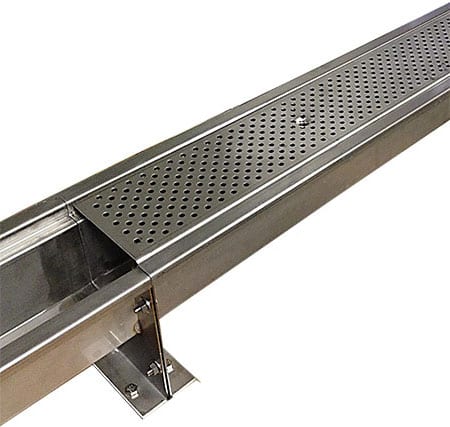
Sanitary Drainage
Stainless steel has an inherent resistance to corrosion, cleaning chemicals, heat, and the growth of bacteria. These aspects make it an ideal material for drainage in food processing facilities.
Grating made with stainless steel is often preferred over cast or galvanized, due to its longevity in corrosive environments. Food production plants, including breweries, wineries, and distilleries, often specify complete floor drains made of 304 and 316 stainless steel alloys due to these characteristics.
Stainless Drain Benefits
- Tolerates harsh cleaning processes
- Corrosion-resistant
- Continual heat resistance up to 212°
- Deters bacterial growth
- Pre-sloped or neutral channels
- Easy installation

How much does a stainless drain cost?
Stainless steel tends to be at a higher cost than that of a similar galvanized steel. That difference can be enormous when you are looking at start-up costs for a microbrewery or a food processing plant manager who needs to bring your drains in line with FDA requirements. These costs only go up as the load requirement of the application increase. Pedestrian loads call for light duty grates and are often more affordable. However, fork truck loads call for heavy-duty drain covers with significantly more stainless steel to meet the structural and weight requirements.
There are options to help mitigate the overall cost of a stainless system. For example, not all applications need a 100% stainless steel drain system with heavy-duty grating. In fact, many applications are able to reduce overall costs of their drain by managing either the load rating of the grating or drain body composition.
Drain Cost Considerations
- Load Rating
- System size needed
- Chemicals being used
- Gallons per minute (GPM)
- Local Regulations
- Neutral or sloped Channels
Stainless Grating
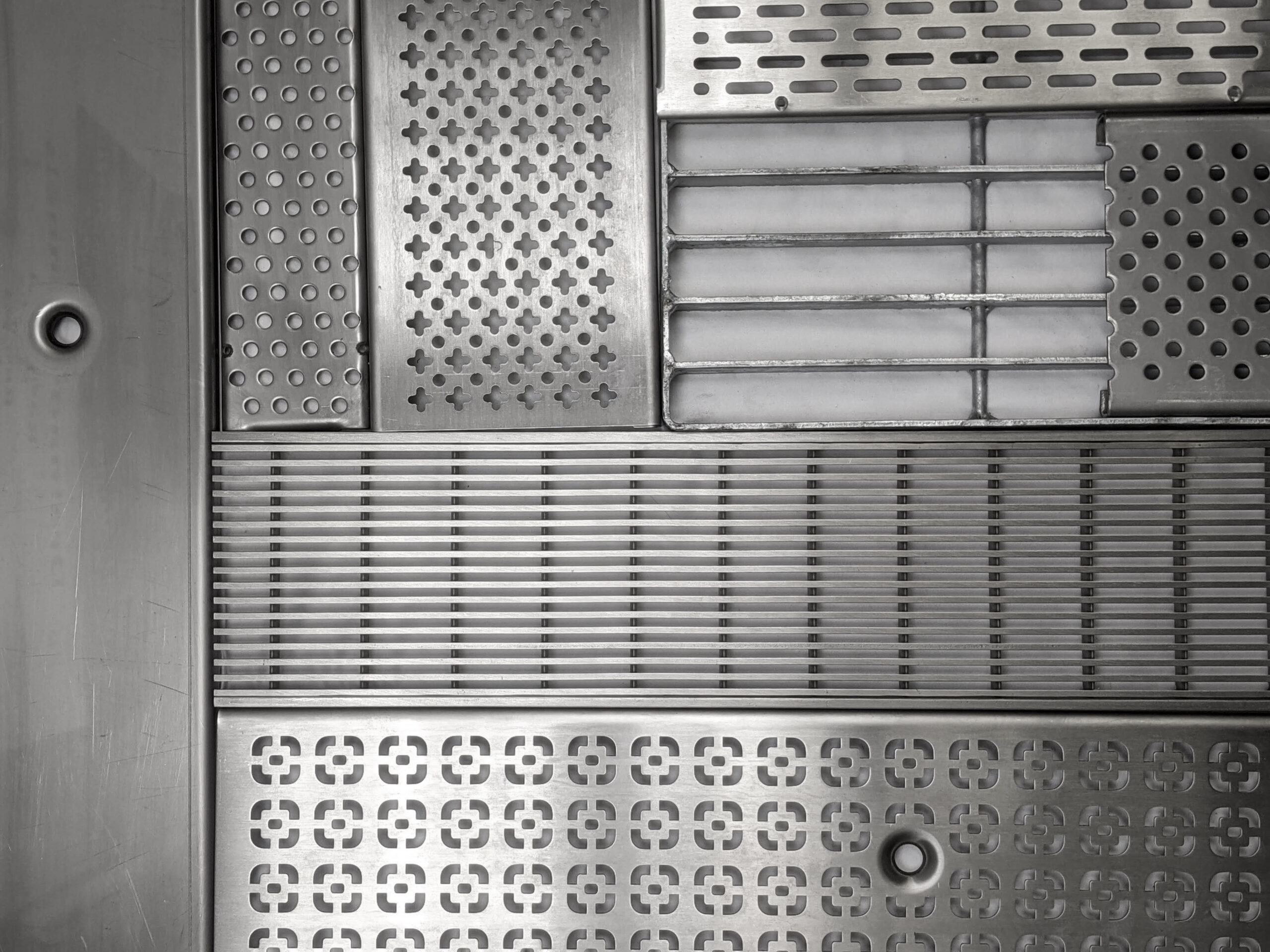
The grating, tops, covers, or grills of a trench drain system is most often required to be composed of stainless steel. The drainage grate takes the brunt of the food production process. If your drain system is required to have stainless steel grating, be sure you select the correct grating for the load your drain will experience. Failure to do so can result in added expense and possible infrastructure damage. Grating is rated from pedestrian Load Class A to Load Class F for heavy-duty applications.
In areas where only people are walking, use a light traffic or pedestrian rated grate. If you need to adhere to local regulations regarding heel-proof or ADA compliance, there are several grate patterns and systems to choose from.
If your process area is exposed to pneumatic wheeled traffic, like a delivery truck, you will need reinforced stainless steel grating. These grates are similar to the pedestrian rated grates but have reinforcing “fins” for added structural support. Applications needing to support fork lift traffic, will need heavy-duty grating in the form of ductile iron or reinforced stainless bar grating.

Channel Type
One of the main concerns within the food processing industry when it comes to drainage, is how resistant the trench drain is to the cleaning chemicals used to kill bacteria. Though stainless steel is the best material for this application type, polymer concrete and plastics can also be used depending on the type. It is a best practice to check your local building codes for what is required, as these vary from place to place.
High temperature polymer concrete (Vinyl ester composition) channels are often used as a substitution to stainless steel due to their affordability in comparison.
Sometimes on-site production practices affect what channel material you should use. How the liquid enters the system matters. For example, in a brewery application, if the excess water is drained onto the floor first, it can be significantly cooler when it enters the drain system versus when it is expressed directly into the channel via a hose or onto the grates under the vats.
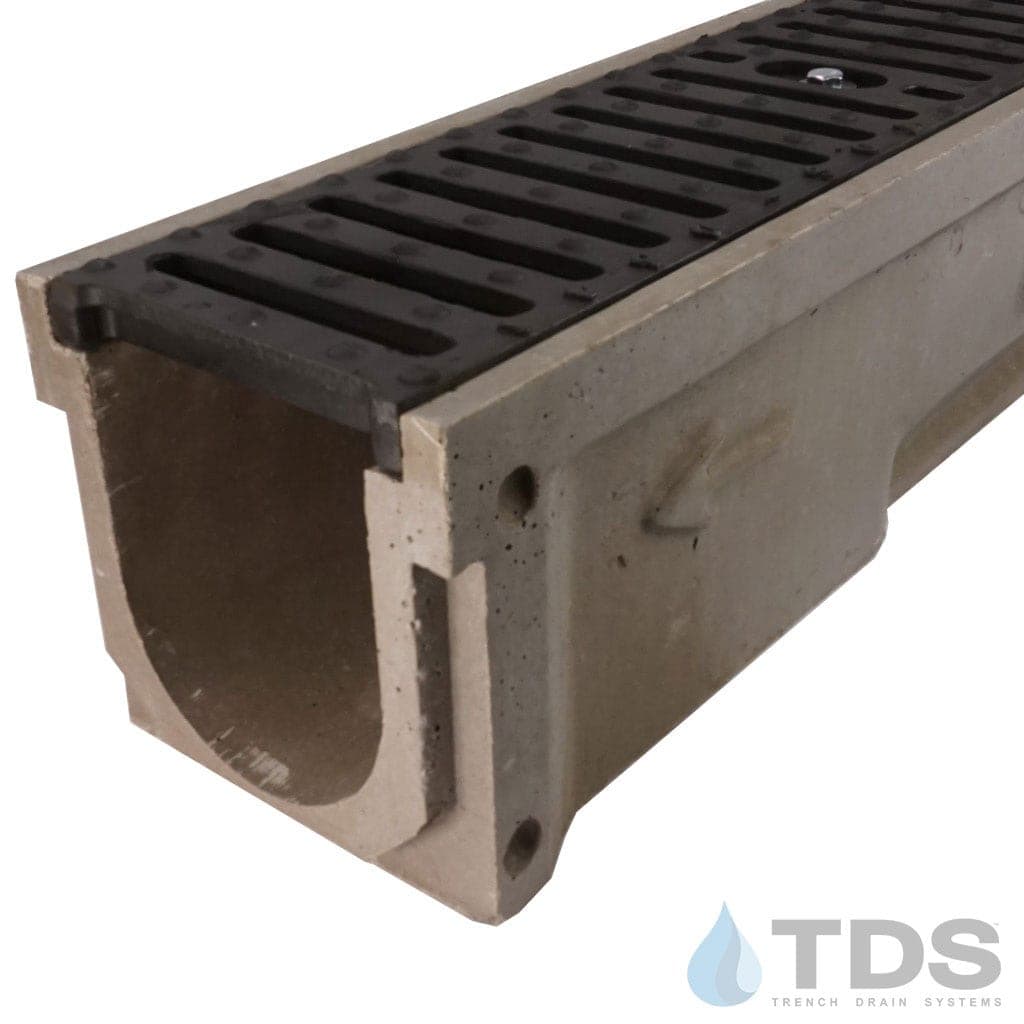
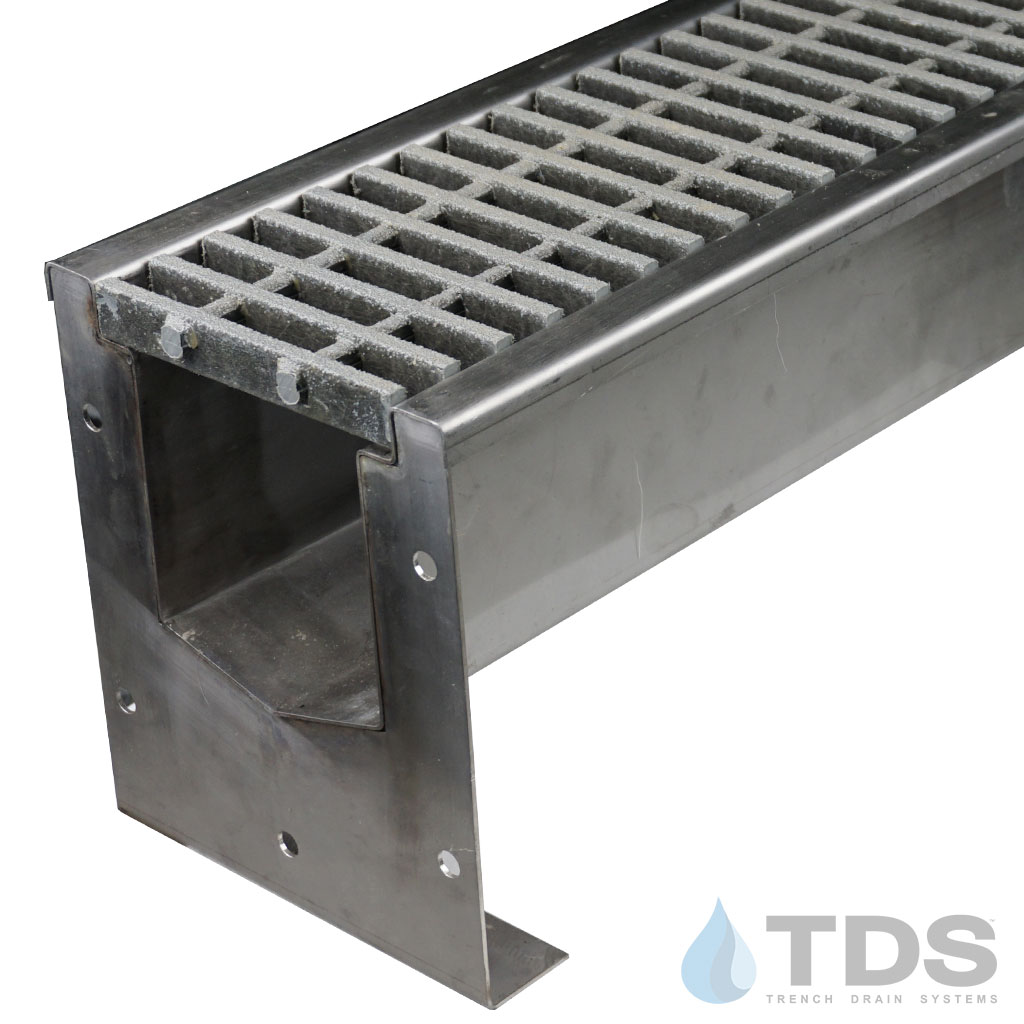
It is ideal to match not only the grating, but also the channel type best suited for the application. An important aspect when considering a sanitary trench drain system is to keep in line with food safe regulations and processes. The SS series trench drain or vinyl ester channels, combined with the appropriate grating may help adhere to these rules while also keeping costs low and providing the necessary drainage type for your application.
The experts at TDS can help you find the right drains to fit your plan and budget. Contact us for a free quote or for further information on drainage solutions visit TrenchDrain.com or DrainageKits.com
Phone: 610-882-3630
Email: Shop@TrenchDrain.com
Click here for a fast and free quote!
